
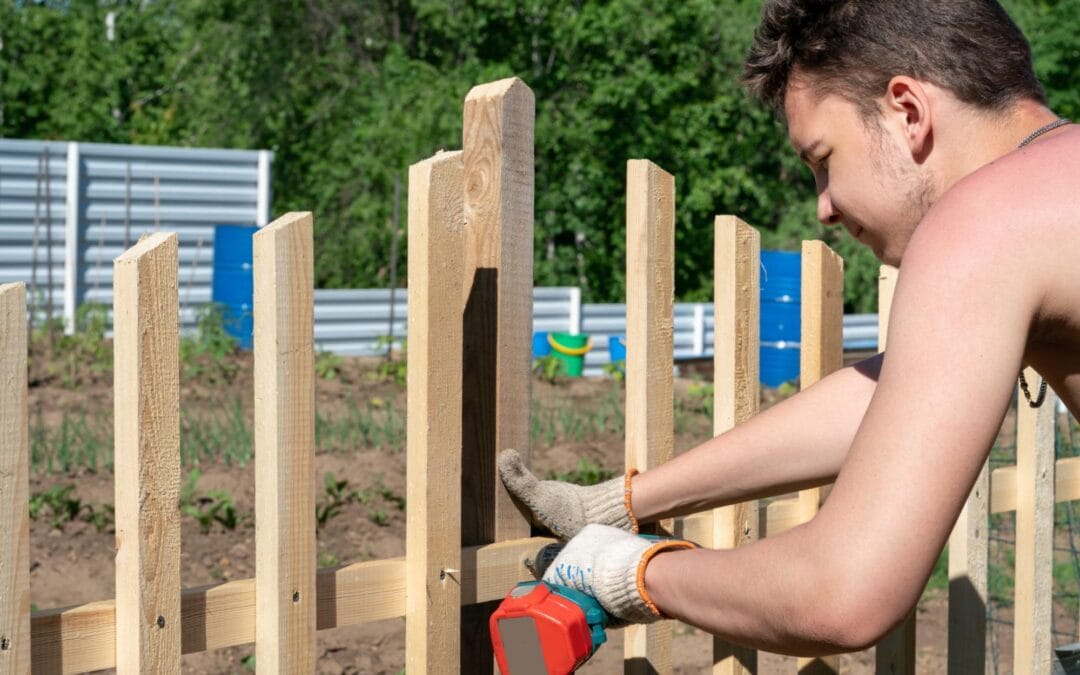
A leaning fence tells you something has moved, but not why. A damaged post, loose footing, shifting soil, erosion, wind pressure, gate weight, or a failed connection can produce the same visible result. That is why fence repair in Georgetown should start with diagnosis rather than immediately pushing the fence upright and bracing it in place.
Hicks Fencing can evaluate the affected section and look for the failure that allowed the fence to move. Identifying that cause matters because straightening a fence without correcting the underlying problem may leave the same forces working against it. The repair should match what failed below or within the fence, not just the angle visible from across the yard.
A Leaning Fence Is a Symptom Rather Than a Diagnosis
Fence posts provide the primary structural support for the rails and pickets between them. When a post moves out of plumb, the connected section often follows, even if its pickets remain intact.
That makes the fence base an important place to start an inspection. A leaning section may be caused by a post that has deteriorated, a sound post moving inside a failed footing, or an entire footing shifting with the surrounding ground.
However, posts aren’t responsible for every crooked fence. Broken rails, loose fasteners, distorted panels, and damaged connections can make portions of a fence sag or twist even when the supporting posts remain relatively stable. Separating those conditions helps keep leaning fence repair focused on the component that actually failed.
The Pattern of the Lean Provides Useful Clues
Before inspecting individual components, step far enough away to see the entire affected run. The number of sections involved and the direction they are moving can narrow down what deserves closer attention.
Some patterns worth noting include:
- One post leaning: The problem may be concentrated at that post, its footing, or the immediate soil.
- Several neighboring posts leaning together: Soil movement, erosion, wind exposure, or a shared installation problem deserves consideration.
- A fence leaning immediately after a storm: Wind, saturated ground, falling limbs, or impact damage may have contributed.
- A section sagging between straight posts: Rails, fasteners, or panel components may be responsible, not the footing.
- A gate and its supporting post moving together: Gate weight, hinge forces, or movement at the support post may be involved.
- The bottom moving farther than the top: Ground changes or physical pressure against the lower fence deserve inspection.
These patterns are clues, not final answers. A closer inspection still needs to determine whether the visible movement matches what is happening at the posts, connections, and ground line.
Fence Post Movement Can Start Below the Surface
A fence post functions partly as a lever. Wind and other lateral forces act on the portion above ground, while the buried portion and its footing resist those forces below the surface.
When that underground support changes, a post can gradually move even though the exposed portion looks intact. Soil can loosen around the footing, concrete can shift, or the post itself can lose strength where it enters the ground.
This is especially important during fence repair in Georgetown, TX, where dense clay and limestone can create changing excavation and support conditions across the same property. One section may have substantial rock near the surface, while another passes through a deeper soil layer before hitting limestone.
Georgetown Soil Can Affect Fence Post Stability
Central Texas ground conditions deserve consideration when a fence begins moving. Georgetown soils can contain substantial clay along with limestone and chert fragments, while limestone bedrock may occur relatively close to the surface in some locations.
Clay changes volume as its moisture content changes. Repeated wetting and drying can therefore alter the soil surrounding a footing, particularly when conditions around one section differ from those elsewhere on the fence line.
Limestone introduces a different variable because bedrock depth can change across a property. The original post installation may have encountered deeper soil at one location and shallower rock at another, meaning apparently identical posts do not necessarily have identical conditions beneath them.
Water Can Remove Support Without Damaging the Post
A fence post doesn’t need to rot for water to contribute to leaning. Concentrated runoff can move soil away from a footing, while prolonged saturation can reduce the support provided by surrounding ground.
Signs that water may be involved can include:
- Exposed portions of a concrete footing that were previously covered.
- Channels or washed soil near the base of a post.
- A low area that repeatedly holds water after rain.
- Soil deposited on one side of the fence but missing from the other.
- Downspout discharge or concentrated runoff reaching the affected section.
- A post that became noticeably looser following heavy rain.
The goal isn’t to blame every leaning fence on drainage. These observations help a fence company decide whether repairing the post without addressing the surrounding ground would leave an obvious contributor unchanged.
Wind Can Expose Weakness That Developed Earlier
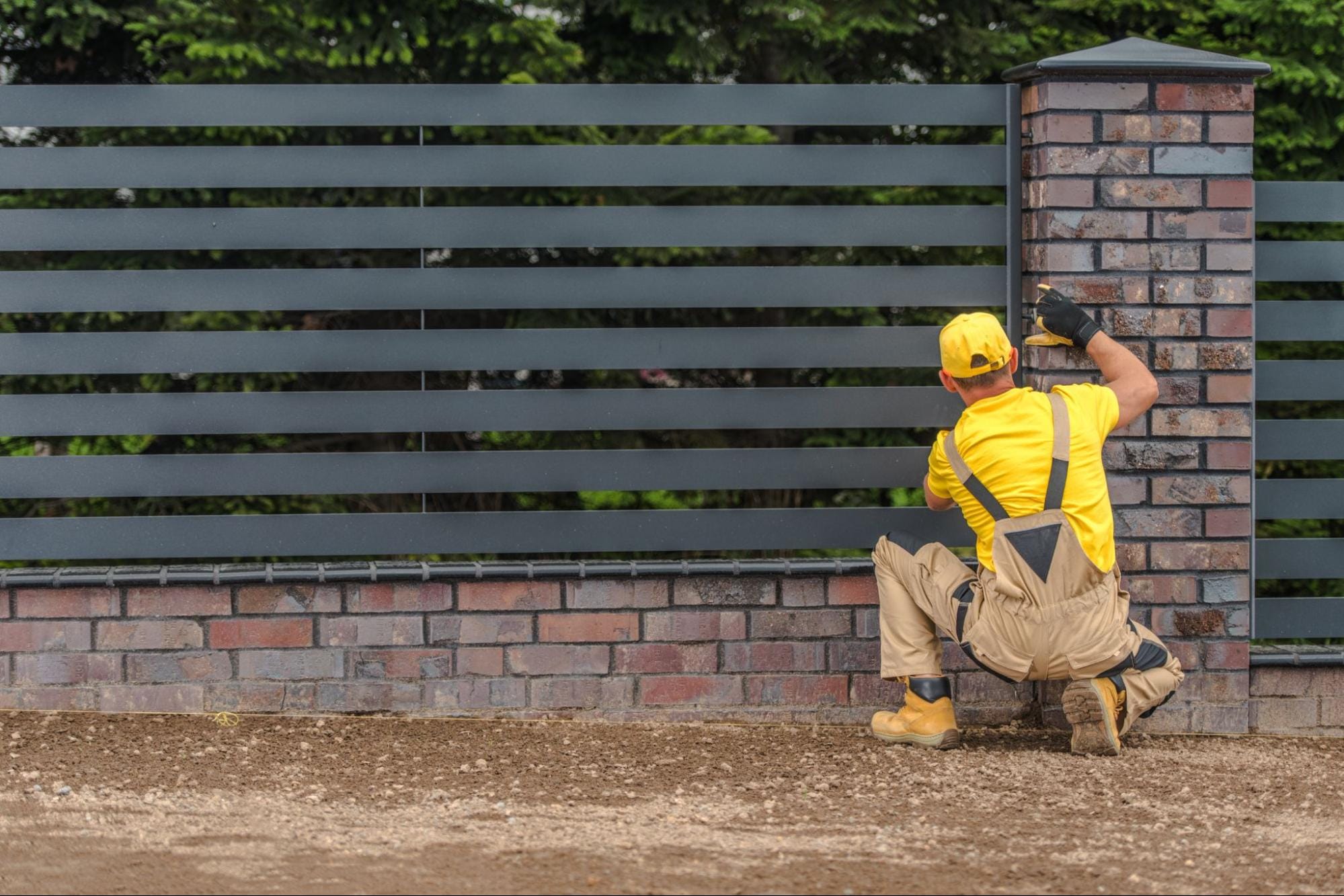 A solid privacy fence presents a broad surface to moving air. Wind pressure transfers through the pickets and rails into the supporting posts, creating lateral force that the posts and footings must resist.
That does not mean a Georgetown windstorm automatically caused every fence that leans afterward. A storm may instead expose an existing weakness such as a deteriorated post, loose footing, failed rail connection, or ground softened by heavy rain.
The timing of the movement still provides valuable information. A fence that changes suddenly during a storm should be inspected for cracked posts, shifted footings, loose rails, damaged fasteners, and impact from branches or other debris rather than assuming the entire structure simply needs to be pushed upright.
Gates Can Create Their Own Leaning Fence Problems
A gate places different forces on its supporting post than a stationary fence section. The gate’s weight extends away from the hinge post, and every opening and closing cycle transfers force through the hinges into that support.
A gate that begins dragging can therefore provide an early clue that something has changed. The gate itself may have sagged, but the hinge post may also have moved enough to alter the relationship between the latch and the receiving post.
Large driveway gates make this distinction especially important because greater width and weight increase the demands on supporting components. Repeatedly adjusting a latch may temporarily close the gate without correcting the post movement that caused the alignment problem.
External Pressure Can Push an Otherwise Sound Fence Out of Position
Not every lean originates from age or installation. Fences can be subjected to forces they were never intended to resist, including vehicle contact, fallen branches, accumulated landscaping material, or heavy vegetation.
A fence should not function as a retaining wall. Soil, mulch, gravel, or raised landscape beds piled against one side can place continuing lateral pressure on rails and pickets, eventually affecting posts and connections as well.
Mature vines can create a different load by adding weight and increasing the amount of material exposed to wind. When investigating fence repair in Georgetown, removing or accounting for the outside force may be just as important as repairing the fence it displaced.
The Repair Scope Should Follow the Number of Failed Posts
One unstable post and an entire line of unstable posts are different repair situations. Counting affected posts helps determine whether the problem is localized or part of a condition extending through a larger portion of the fence.
A broader inspection becomes especially useful when:
- Several consecutive posts move when you apply pressure.
- Multiple footings have become exposed or shifted.
- The fence leans in the same direction across a long run.
- Rails and connections are failing at several locations.
- Gate alignment problems appear alongside movement in nearby sections.
- Previous repairs have already been made repeatedly along the same fence line.
None of these observations automatically means the whole fence requires replacement. They indicate that repairing the first visibly leaning post without examining the rest of the run may underestimate the problem’s scope.
Straightening the Fence Is Only Half of the Job
 Temporary bracing can hold a leaning section upright, but it doesn’t explain why the fence moved. If the footing remains loose, the post is damaged, or the surrounding soil keeps shifting, removing the brace can let the same problem return.
A lasting repair should restore the failed support and then return the fence to alignment. That may involve resetting or replacing a post, rebuilding support around a footing, repairing rails or connections, or correcting an external condition that was pushing against the fence.
This diagnostic approach is what separates structural fence repair in Georgetown from a cosmetic adjustment. The objective isn’t just to make the fence look straight on repair day, but to correct the specific failure causing the movement.
Get to the Cause Before Repairing Your Leaning Fence
A fence can lean because of rot, a loose footing, soil movement, erosion, wind, damaged connections, gate loads, or outside pressure. Because several problems can create nearly identical symptoms, identifying the cause first helps fence contractors keep the repair focused on the component that needs attention.
Hicks Fencing can inspect leaning sections and determine what may be contributing to the movement before recommending fence repair in Georgetown. Contact us today to request a free estimate and find out what is causing your fence to lean before a small movement develops into damage across additional sections.
Frequently Asked Questions
Should I brace a leaning fence while waiting for repairs?
Temporary bracing may help limit additional movement in some situations, but it should not be treated as a permanent structural repair. Avoid placing yourself beneath or against a severely unstable section when attempting to secure the area.
Can a fence look straight even when a post is starting to fail?
Yes, surrounding rails and neighboring posts can temporarily help hold a weakening post in position. Movement at the base, changing gate alignment, or newly loose connections may appear before the lean becomes obvious from a distance.
Does a leaning ornamental steel fence require the same diagnosis as wood?
The same basic principle applies because you still need to identify the cause of movement, but the possible failures differ. Steel posts may bend from impact or develop footing problems rather than the wood decay associated with timber posts.
Find More Practical Fence Advice
A leaning fence is only one of the repair and installation problems that becomes easier to understand once you know what is happening beneath the visible boards and rails. Explore the Hicks Fencing blog for more guidance on fence repairs, materials, installation planning, gates, soil conditions, and other fencing considerations for Georgetown properties.